
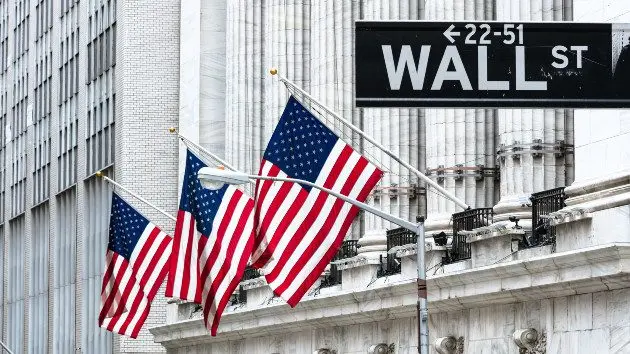
(NEW YORK) — Stocks tumbled in early trading on Tuesday as President Donald Trump threatened tariffs on multiple European countries as part of a push for U.S. control of Greenland.
The Dow Jones Industrial Average fell 735 points, or 1.4%, while the S&P 500 declined 1.5%. The tech-heavy Nasdaq dropped 1.8%.
The selloff came in the first trading session since Trump announced the new tariffs in a social media post on Saturday.
Under the proposed plan, eight European nations — including Denmark, France, Germany and the United Kingdom — will be slapped with 10% tariffs beginning on Feb. 1. Those levies are set to escalate to 25% on June 1, Trump said.
“This Tariff will be due and payable until such time as a Deal is reached for the Complete and Total purchase of Greenland,” Trump added.
Trump escalated the trade confrontation with Europe on Tuesday, threatening a 200% tariff on French wine if French President Emmanuel Macron opts to forego participation in Trump’s proposed “Board of Peace” for Gaza.
Greenland is a self-governing territory of the Kingdom of Denmark. Trump first raised the prospect of acquiring the minerals-rich island in his first term. Danish and Greenlandic politicians have repeatedly rebuffed such proposals.
European leaders, meanwhile, continued to push back on Trump’s ambitions and publicize their coordination efforts on the issue.
European Commission President Ursula von der Leyen said in a post on X that she met with a bipartisan congressional delegation to discuss both Russia’s war in Ukraine and recent tensions around Greenland.
Von der Leyen said she “addressed the need to unequivocally respect the sovereignty of Greenland and of the Kingdom of Denmark. This is of utmost importance to our transatlantic relationship.”
Treasury yields jumped on Monday, suggesting possible concern about economic instability stemming from the confrontation between Trump and European nations.
Since bonds pay a given investor a fixed amount each year, the specter of inflation risks devaluing the asset and, in turn, makes bonds less attractive. When demand for U.S. treasuries falls, bond yields rise.
This is a developing story. Please check back for updates.
ABC News’ David Brennan contributed to this report.
Copyright © 2026, ABC Audio. All rights reserved.